What happens to sanitation during a disaster response?
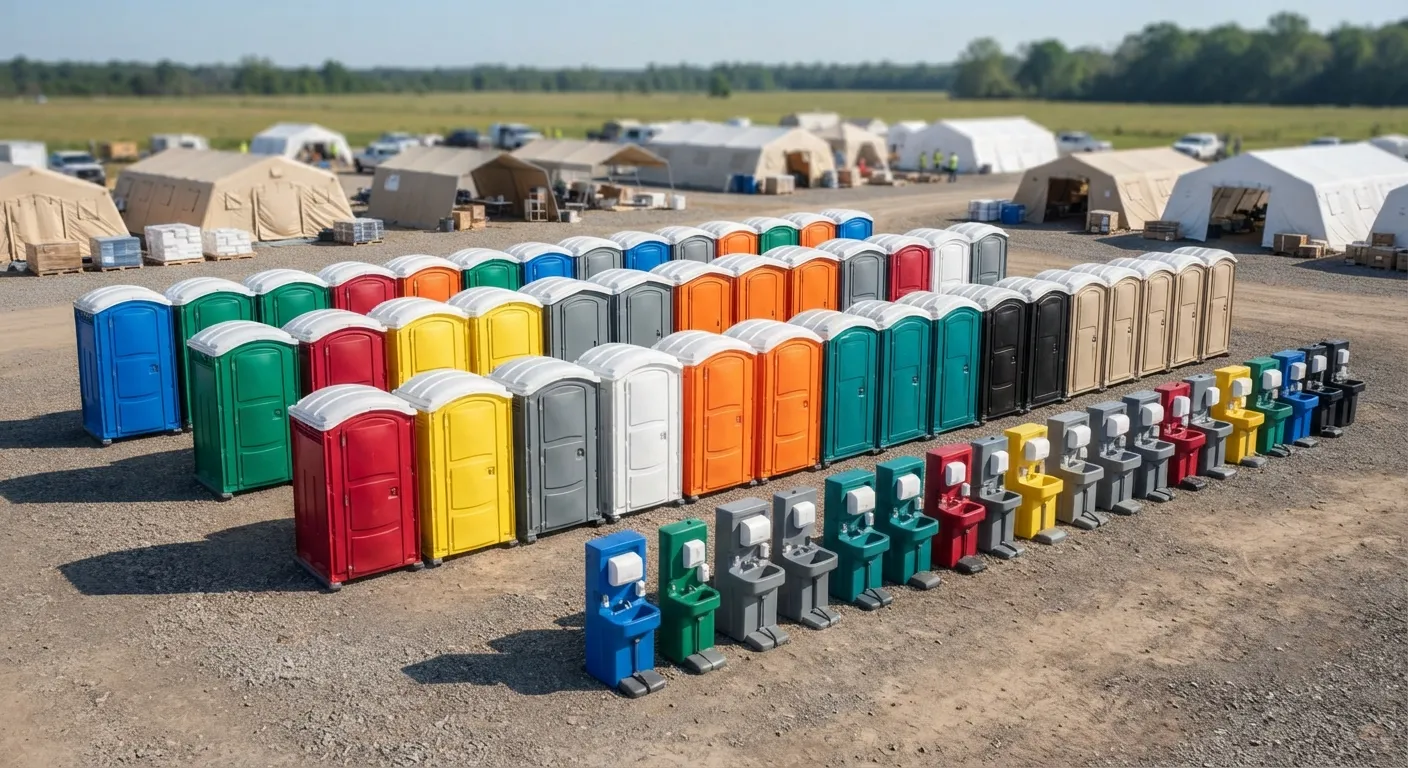
Water lines break, septic systems flood, or a shelter fills faster than its restrooms can handle. That is when emergency porta potty rental matters most. Santa Clarita sits close to Stevenson Ranch, 7.9 miles southwest, and Castaic, 10.7 miles northwest, which means a disaster response staging area often needs coverage across more than one command post at once. We treat that as normal, not an exception.
A portable toilet rental can go up before power or water comes back, because the units don't need either. Where a septic tank has flooded or backed up, emergency septic service can pump it out rather than wait for the tank to fail further. OSHA 1926.51(c)(1) sets toilet ratios for construction-style workforces, which is the same math a relief operation uses when volunteers and crews outnumber a normal household. For non-construction relief staff working out of a fixed shelter, 1910.141(c)(1)(i) applies instead. Handwashing matters just as much: 29 CFR 1910.141(d)(2) requires soap and towels or a hand-drying device, not just sanitizer, at handwashing station rental setups. A shelter that skips that step is out of compliance and it shows fast.
How fast can Santa Clarita Porta Pros deliver during an emergency?
Speed depends on what's already staged and how far the site sits from our yard. A standard unit rents by the day starting around the low end of that range, and disaster deployments are usually billed as day or week rentals rather than long-term contracts. Roll-off delivery trucks need about 60 feet of straight clearance behind the vehicle, so a flooded cul-de-sac or a debris-choked driveway can slow a roll-off dumpster rental delivery even when the toilets go in fine.
We keep standard porta potty rental units, ADA accessible porta potty units and handwash stations ready to move together, because a shelter population always includes people who need the accessible unit and people who just need the closest one. ADA Standards 213.2 requires at least one accessible unit in any cluster of single-user toilets, and 304.3.1 requires a 60 inch turning circle in front of it. That is not optional in a shelter setting any more than on a job site. For sites where debris removal runs alongside sanitation, construction dumpster rental and 10 yard dumpster rental both scale down for tighter residential streets.
| unit | duration | typical price |
|---|---|---|
| standard | day | $150 |
| standard | week | $200 |
| ada | day | $230 |
| service_fee | day | $175 |
Do disaster relief sites need permits for portable toilets in Santa Clarita?
Placement in the public right of way needs confirming with the city before units go down, especially if a shelter or staging area spills onto a street or sidewalk. We don't guess at that on a disaster timeline. Check porta potty permit requirements or call the city directly, and lean on our porta potty placement guide for the practical side, like ground clearance and truck access.
A flooded or overwhelmed septic system tied to a shelter kitchen is its own problem. A grease interceptor is typically pumped once fats, oils, grease and solids reach 25 percent of the liquid depth, and a flooded kitchen can hit that mark fast; see grease trap pumping. A residential septic tank is normally pumped every 3 to 5 years, but disaster flooding can force an out-of-cycle pump-out, covered under septic pumping service or how often to pump a septic tank. If the shelter needs a holding tank instead of septic access, holding tank rental covers that gap. For temporary secure storage of donated supplies or equipment, storage container rental and mobile office trailer rental both deploy on similar timelines. This whole page belongs under Portable Restroom Rental in Santa Clarita, CA, our main sanitation hub for the city.
How many toilets does a disaster shelter need?
OSHA 1926.51(c)(1) is the baseline most relief coordinators use: 1 toilet for 20 people or fewer, then 1 toilet and 1 urinal per 40 up to 200. Use how many porta potties do I need to run the math against your expected headcount.
Can you deliver to a shelter with no power or water on site?
Yes. Standard units need neither. A deluxe flushable porta potty runs on its own tank too, so lost utilities don't stop deployment.
What if the site is flooded or hard to access?
Tell us before delivery. Roll-off trucks need roughly 60 feet of clear approach, and a flooded street changes that math. We'll route around debris where we can.
Do you provide handwashing stations separately from toilets?
Yes, and 29 CFR 1910.141(d)(2) requires soap and towel or drying-device access, not sanitizer alone. See portable sink rental for a plumbed option.
How quickly can service scale up if more people arrive?
We add units to an existing delivery route rather than starting a new one, which is faster. Call early once headcount estimates start moving.
Next step
Get a delivery date
Tell us the address, the dates and the headcount. We size the order and confirm the route.