
What are the placement rules for a porta potty?
Ground has to be flat, firm and able to hold roughly 400 pounds once the tank fills. ADA Standards section 302.1 calls for stable, slip resistant surfaces, so gravel pads or plywood over grass work better than bare dirt after rain. Leave a clear route at least 36 inches wide under ADA Standards section 403.5.1, since a wheelchair user or a service tech with a hose cart both need that space. Keep the unit within reach of the truck: our drivers want a straight shot, not a maze around parked cars or dumpsters. If you're also renting a roll-off dumpster, remember that unit needs about 60 feet of straight clearance behind the truck too, so plan both drop zones together rather than jamming everything into one corner of the lot. Avoid placing units under low branches, near open flame, or on any spot that floods when it rains, which happens fast on sloped Santa Clarita lots after a storm. For events, our event restroom rental team scouts turf, tent stakes and traffic flow before anything gets delivered. Wondering how many you actually need before you worry about where they go? Start with how many porta potties do I need and work backward from headcount.
Do I need a permit to place a porta potty on public property?
Placement on a sidewalk, street or other public right of way in Santa Clarita needs confirming with the city before delivery. We do not know the exact fee or process off the top of our head, and neither should you assume one. Check with the city's permitting office directly, since rules vary by street and by how long the unit sits there. Private property, like a driveway, backyard or fenced job site, skips that question entirely. If you're setting up for a home renovation porta potty job and the unit stays on your own lot, you're clear. Construction crews working a curb lane or staging in a public lot should ask before the truck ever leaves our yard. This isn't just a porta potty question either: a dumpster placement permit can carry its own cost and paperwork if that container also sits in the right of way, so check both at once instead of twice. Our porta potty permit requirements page walks through what to ask the city and what we can help confirm on our end.
How many porta potties does a job site need?
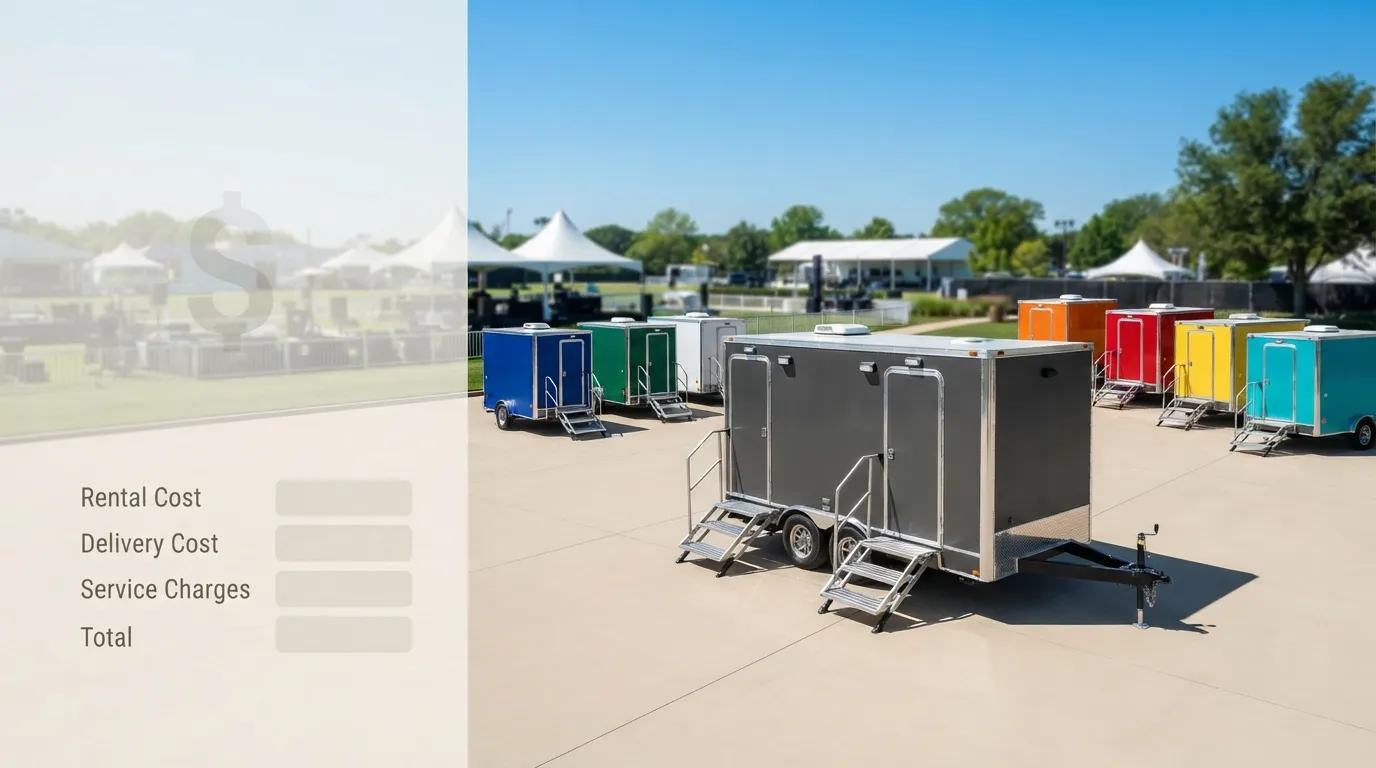
OSHA 1926.51(c)(1) sets the baseline: one toilet for 20 or fewer construction workers, then one toilet seat and one urinal per 40 workers once you pass 20, dropping to one per 50 once the crew hits 200 or more. That ratio drives where units go as much as how many you order, since a 40-person crew spread across a wide Santa Clarita site needs stations at both ends, not one cluster by the trailer. ANSI/PSAI Z4.3 sets the baseline service interval at once a week for up to 10 users over a 40 hour week, so placement also has to account for a truck getting back in weekly without disturbing active work. If your crew is spread across a farm operation instead of a construction site, OSHA 1928.110 calls for field sanitation within a quarter mile walk of hand-labor employees, which changes the math entirely. Our construction site services page breaks down crew-size math further, and OSHA portable toilet requirements covers the full ratio table, the same way a placercille septic pumping service crew has to plan truck access around tank location rather than convenience. Under ADA Standards section 213.2, at least 5 percent of any cluster, and never fewer than one, has to be an accessible unit; see ADA accessible porta potty for what that unit needs to include.

Where should units go at an event or venue?
Place event units near foot traffic but away from food service, stages and generator noise, with a hard surface underfoot if the lawn is soft. A 60 inch turning circle, called for under ADA Standards section 304.3.1, needs to sit clear of tent lines or vendor tables near any accessible unit. Door openings need at least 32 inches clear per ADA Standards section 404.2.3, so don't wedge a unit between two barriers with less room than that. If you're renting temporary fencing or crowd control barriers for the same event, plan restroom placement first, since fence lines get built around the units, not the other way. Weddings, festivals and county fairs each have different flow patterns. Our wedding restroom rental, festival restroom rental and county fair restrooms pages cover layout specifics for each. For anything bigger than a handful of standard units, a restroom trailer rental needs level ground and a nearby power hookup, which our crew checks during the site walk.
How far in advance should I plan placement?
Book your site walk at least a week before delivery, two if the job needs a public right of way check. Santa Clarita sites with tight access, slopes or shared parking take longer to plan than an open lot. Rushing placement risks a truck that can't reach the pad on delivery day.
Can I move a porta potty myself once it's placed?
Small moves across flat, stable ground are fine if the tank is empty or nearly so. A full 60 to 70 gallon tank is heavy and can tip on uneven ground. Call us for anything beyond a few feet. We'll reposition it during a service visit at no surprise cost.
What ground surface works best under a unit?
Compacted gravel or a plywood pad beats bare grass or dirt, especially after rain softens the soil. Concrete or asphalt is ideal where available. Avoid soft turf near sprinklers or slopes that pool water, since a sinking or tilting unit becomes a service problem fast.
Does a placerville septic pumping service crew need to think about placement too?
Any septic pumping crew, whether local or a placerville septic pumping service handling an out of area property, needs the same straight truck approach and firm ground we ask for on porta potty drop-off. Tank location and access get planned together, not as an afterthought once the truck is already on site.
Does a septic pumping truck need special placement clearance too?
Yes, similar to our delivery trucks. If you're scheduling separate septic pumping service or grease trap pumping, that truck also needs a straight approach and firm ground, not a route through soft yard or tight side gates.
Do storage containers or mobile offices have placement rules too?
Similar principles apply. A storage container rental or mobile office trailer rental needs level, firm ground and clear access for a flatbed delivery, plus room to open container doors or trailer doors fully without hitting a fence or dumpster; if a unit on site needs mobile office trailer replacement doors down the road, that same clear access matters for the swap truck too.
What if a handwashing station needs replacement parts?
Keep handwash stations on the same firm, level pad as nearby toilets so service techs can reach both in one stop. If a station on site needs ozark river portable sink replacement parts, our crew can source and swap them during a routine visit instead of a separate trip, as long as the unit sits somewhere the service cart can actually reach.
Next step
Get a delivery date
Tell us the address, the dates and the headcount. We size the order and confirm the route.