
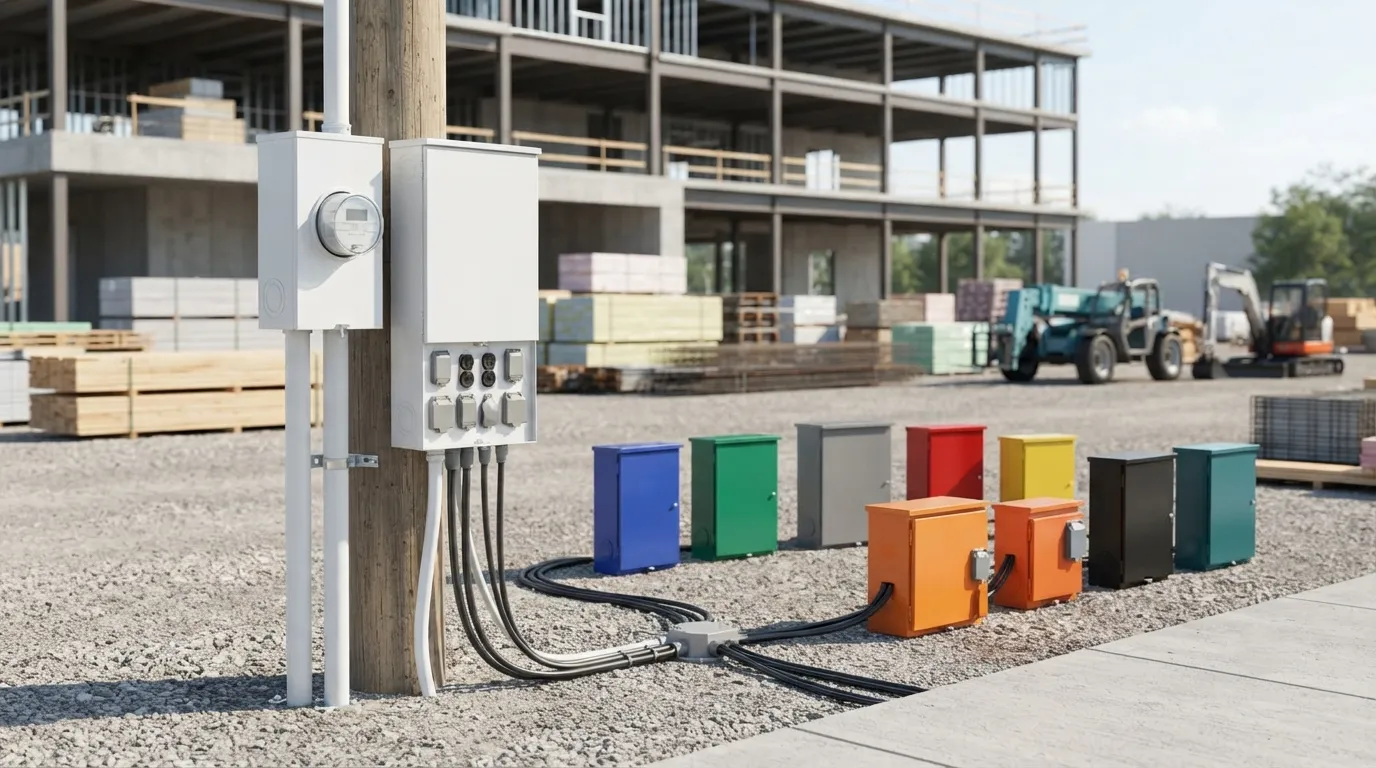
What Is a Temporary Power Pole?
It is a freestanding pole, sometimes called a temp pole or spider box on wheels, that holds a meter socket, a breaker panel and outlets so a site can draw power before the utility connects permanent service. Most construction jobs spec a 200 amp temporary power pole because it covers typical tool loads, a site trailer, and lighting without tripping breakers all day. Electricians wire it to code, the utility sets the meter, and the pole stands until permanent service goes live. This pairs naturally with other construction site services since a job usually needs power, sanitation and waste handled together. If you're already renting a mobile office trailer or a storage container for the site, the power pole is what keeps them running. Crews also lean on it to run a light tower after dark, especially on winter jobs with short daylight.
How Does Temporary Power Pole Installation Work?
Installation starts with a permit application and an electrical plan showing the pole's amperage, wire size and grounding. A licensed electrician sets the pole on a base, usually a treated post or a UL-listed prefab unit, at the location your utility and inspector approve. Santa Clarita sites often need the pole placed close to the property line so the utility can run service drop without crossing active work areas. Inspectors check grounding, panel labeling and weatherproofing before the utility connects power. Site conditions matter too: a roll-off dumpster or temporary fence placed too close can block inspector access, so plan the layout early. Once the pole passes, expect the same routine maintenance any electrical panel needs: keep the area clear per OSHA 1926.25 housekeeping rules on debris in work areas, and keep cords off the ground where trip hazards form near handwashing stations or portable toilets.
What Are Temporary Power Pole Requirements?
Requirements vary by jurisdiction, and placement in the public right of way or on a specific parcel needs confirming with the City of Santa Clarita before you set the pole. What's consistent everywhere is the electrical baseline: grounding, GFCI protection on construction circuits per OSHA 1926.404(b)(1)(ii), and a panel sized to the load. A 200 amp pole is standard for mid-size construction, while smaller remodel jobs sometimes get by with less. If your project also needs temporary fence rental or crowd control barrier rental around the pole and panel, factor that into your site plan before the electrician sets footings. Pair the pole request with your porta potty rental in Santa Clarita order so both trades show up on the same delivery day.
FAQ
How much does a temporary power pole cost?
Cost depends on amperage, permit fees and how far the electrician runs conductor to the panel. It's a job-specific quote from your electrician or rental provider, not a flat rate, since site distance and inspection timing both affect the final number. Ask early so it doesn't delay your construction dumpster rental schedule too.
Do I need a permit for a temporary power pole?
Most jurisdictions require one, and Santa Clarita placement specifics need confirming with the city before installation. Your electrician typically pulls the permit as part of the installation package. Confirm this the same week you book temporary fencing or storage so nothing sits waiting on paperwork.
How long can I rent a temporary power pole?
As long as the job needs it, from a few weeks on a small remodel to many months on a full build. Coordinate the return date with your dumpster rental pickup and storage container removal so the site closes out in one pass.
Can a temporary power pole run a construction trailer?
Yes, a 200 amp pole typically covers a site trailer, tools and lighting together. If you're also running a restroom trailer or shower trailer, tell your electrician so the load calculation includes them from the start.
Where should the power pole go on my site?
Close to the utility connection point and clear of delivery paths, since a roll-off dumpster needs about 60 feet of straight clearance behind the truck for placement. Keep it away from foot traffic near portable toilets or a handwashing station, and confirm the spot with your inspector before digging.

Next step
Get a delivery date
Tell us the address, the dates and the headcount. We size the order and confirm the route.